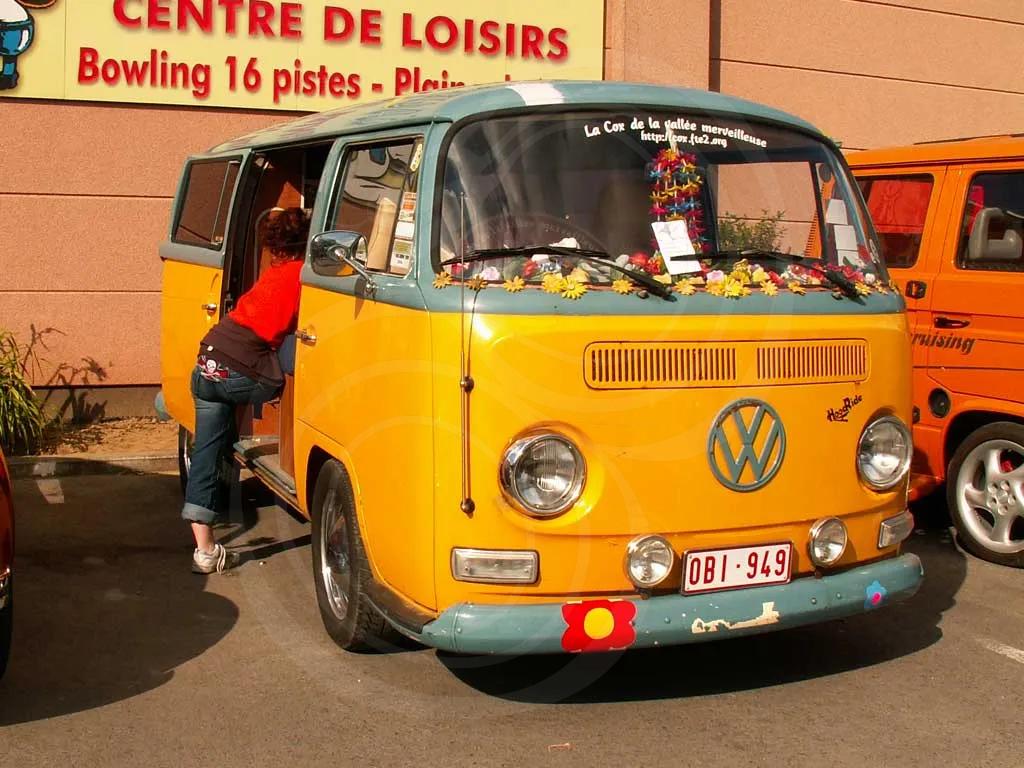

The Volkswagen Transporter, affectionately known as the "Bus" or "Kombi," holds a unique place in automotive history. Its simple, utilitarian design, born from post-war necessity, quickly transcended its commercial roots to become a counter-culture icon.
Early models, particularly the split-window T1, are instantly recognizable. Their air-cooled, rear-mounted engines, while reliable, offered modest performance and a distinctive, sometimes noisy, driving experience. Handling, by modern standards, is vague, and the brakes require a firm foot.
The Transporter's appeal lies in its versatility. It served as a delivery van, a camper, and a family hauler, adapting to various needs with clever interior configurations. The spacious cabin, despite its basic appointments, fostered a sense of community.
Later generations, like the T2 and T3, saw improvements in engine power and safety features, but the core ethos remained. Rust, however, is a constant enemy, and finding a well-preserved example requires diligent searching. While not a performance machine, the VW Transporter offers a charming, nostalgic driving experience and a tangible link to a bygone era. Its enduring popularity speaks volumes about its enduring appeal.