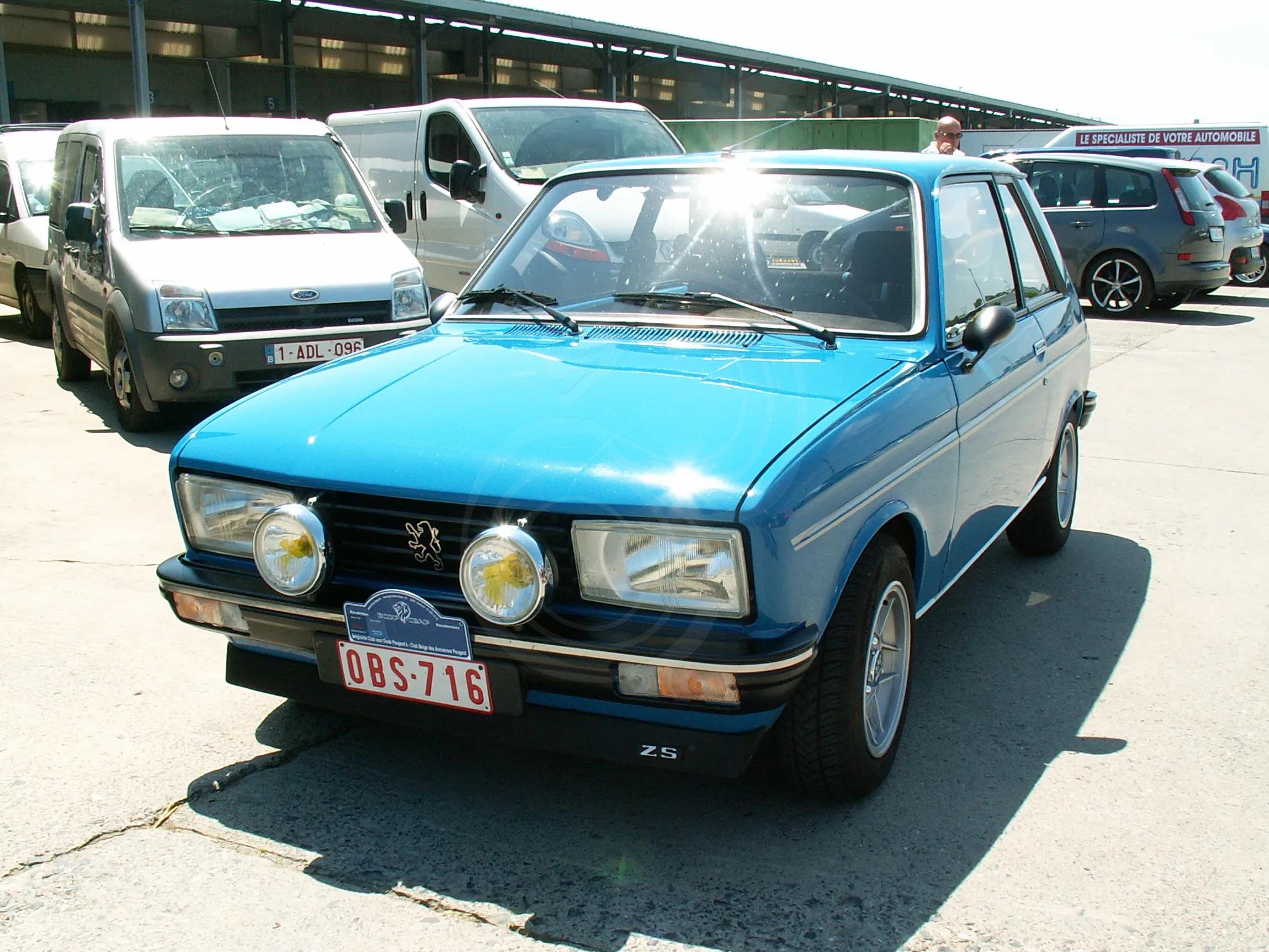

The Peugeot 104, launched in 1972, was a significant step for the French marque, marking their entry into the burgeoning supermini market. Offered initially as a four-door saloon, its compact dimensions and distinctive styling, penned by Pininfarina, were its primary selling points. The sharply angled rear window and high boot lid gave it a somewhat boxy, yet undeniably charming, silhouette.
Under the hood, the 104 employed a range of inline-four engines, initially ranging from 954cc to 1124cc, later expanding to include larger displacements. Performance was, predictably, modest, prioritizing fuel economy over outright speed. Handling was competent, though the car's light weight and relatively simple suspension could lead to a somewhat lively ride on less-than-perfect roads.
Inside, the 104 offered a surprisingly spacious cabin for its size, though materials were typical of the era – functional rather than luxurious. The dashboard design was clean and uncluttered.
While the 104 was a sales success for Peugeot, it wasn't without its flaws. Rust was a common enemy, and the mechanicals, while generally reliable, could require regular maintenance. Despite these shortcomings, the Peugeot 104 remains a charming and historically important car, representing a pivotal moment in Peugeot's history.