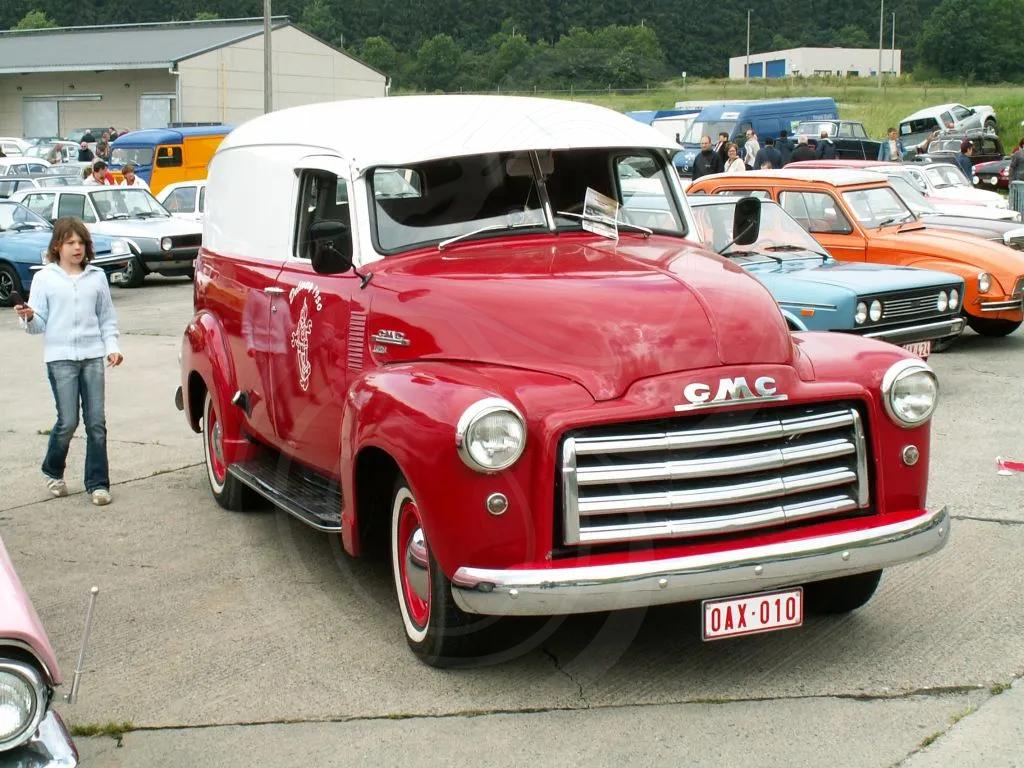

The GMC 100, a workhorse of the post-war era, represents a solid, if unspectacular, entry into the light-duty truck market. Produced from 1947 to 1955, the 100 series, identifiable by its rounded cab and prominent grille, offered a no-frills approach to utility.
Power came from a variety of inline-six engines, known for their reliability rather than their performance. Expect a leisurely pace, especially when loaded. The three- or four-speed manual transmissions were robust, but gear changes could be clunky.
Inside, the cabin is spartan. Basic gauges, a bench seat, and minimal sound insulation were the norm. Comfort was secondary to functionality. The driving experience is characterized by a heavy steering feel and a ride that reflects the truck's work-oriented design.
While not particularly stylish or luxurious, the GMC 100 possesses a certain honest charm. Its enduring appeal lies in its simplicity and its ability to perform the tasks it was designed for. Rust, however, is a common enemy, so prospective buyers should thoroughly inspect the body and frame. The GMC 100 is a testament to a bygone era of American manufacturing, a truck built to last, even if it wasn't built to impress.