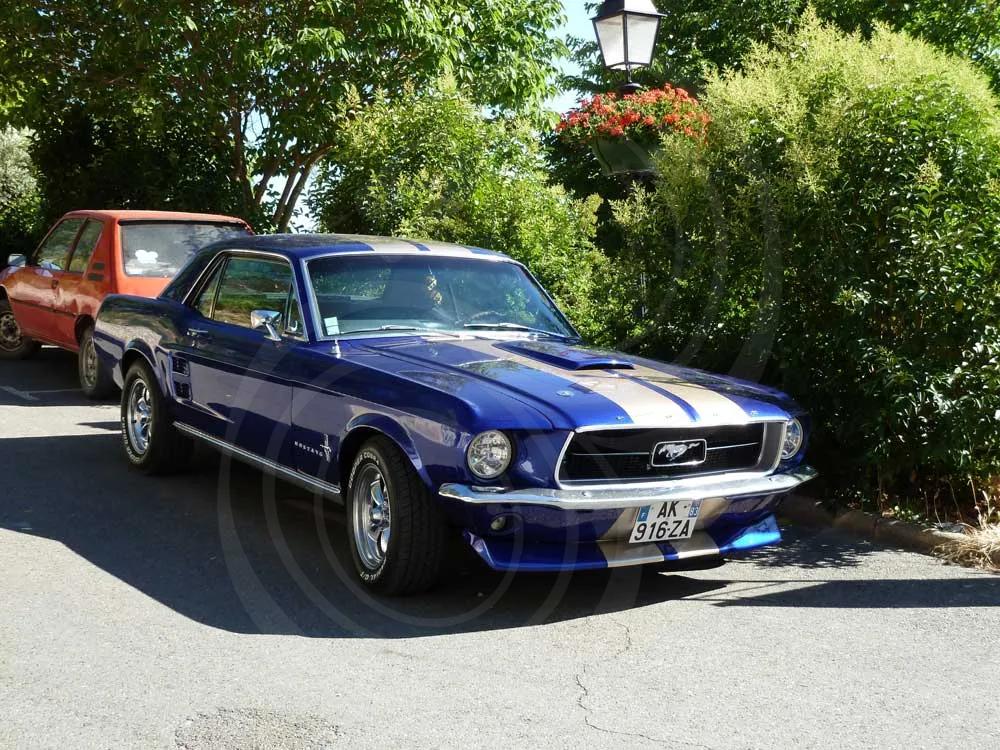

The Ford Mustang I, a mid-engine, two-seater concept car unveiled in 1962, represents a fascinating, yet ultimately unrealized, detour in the Mustang's history. This sleek, low-slung roadster, a stark contrast to the eventual production pony car, was designed to showcase Ford's engineering prowess and explore a more sporting direction.
Powered by a 1.7-liter V4 engine, the Mustang I offered a glimpse of performance potential, though its power output was modest. Its aluminum body, crafted by Dearborn Steel Tubing, contributed to a lightweight design, enhancing its agility. The independent suspension and disc brakes, advanced for the era, further hinted at its sporting intentions.
While visually striking, the Mustang I's impact was primarily as a design study. It served as a crucial precursor, influencing the styling cues that would later define the iconic production Mustang. However, the mid-engine layout and two-seater configuration proved incompatible with Ford's vision for a mass-market, affordable car. The Mustang I, therefore, remains a captivating footnote, a testament to Ford's experimentation and a reminder of the road not taken. It's a beautiful car, but its legacy is more about what it inspired than what it achieved in its own right.