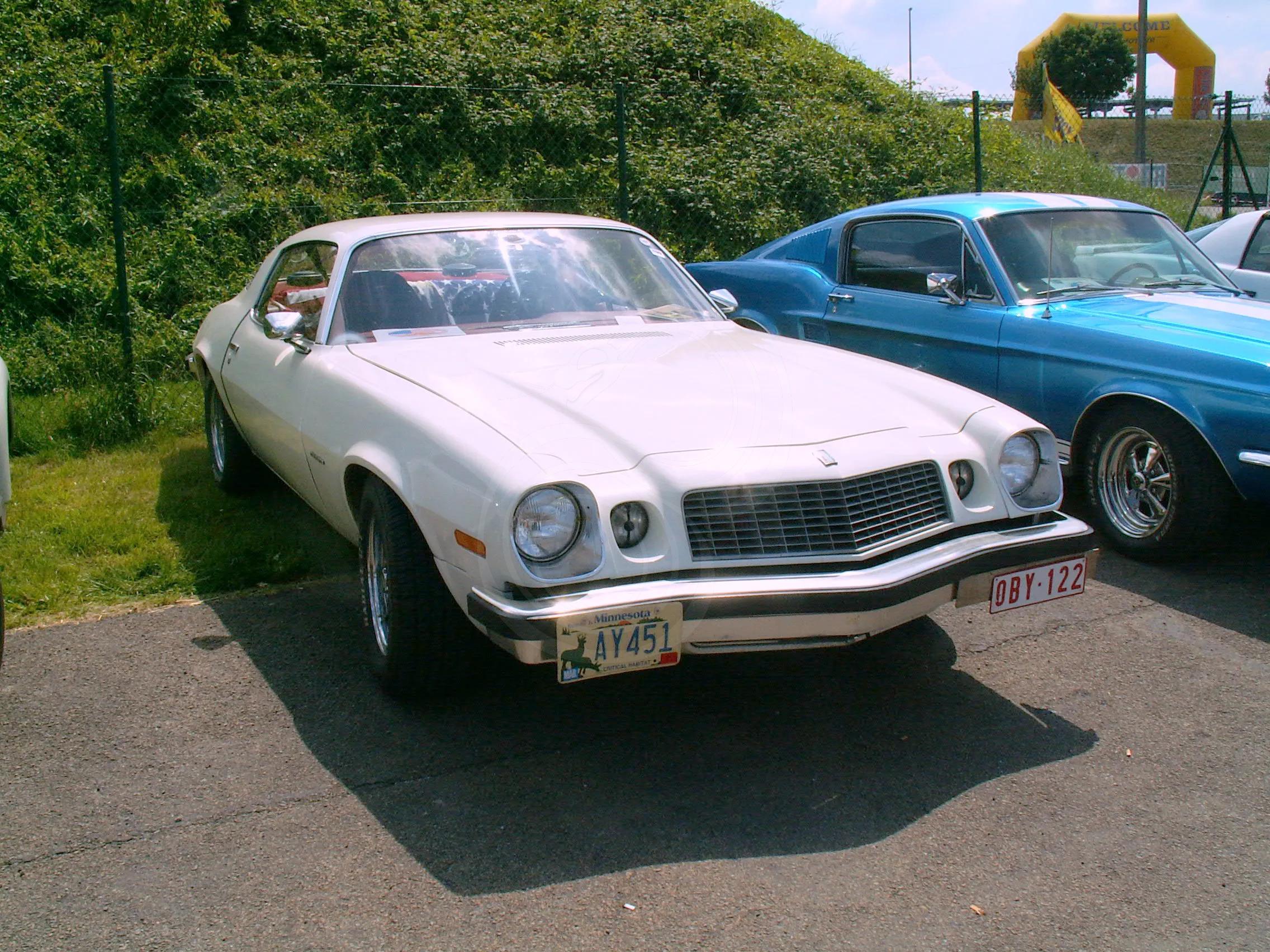

The second-generation Chevrolet Camaro, produced from 1970 to 1981, represents a significant departure from its predecessor. While retaining the pony car spirit, the "Camaro II" adopted a longer, wider, and arguably more aggressive aesthetic. The styling, particularly the long hood and short deck, was undeniably impactful, though some found the design heavy-handed compared to the original.
Mechanically, the Camaro II offered a range of engines, from economical inline-sixes to potent V8s, catering to diverse buyer preferences. Performance varied widely depending on the chosen powerplant. Handling, while improved over the first generation, still suffered from the limitations of its era, with a live rear axle and relatively basic suspension.
Interior quality was often criticized, with materials feeling cheap and assembly sometimes inconsistent. Visibility, especially in early models with small rear windows, could be a challenge. Reliability, while generally acceptable, was also subject to the vagaries of the era's manufacturing processes.
The Camaro II's long production run saw numerous updates and variations, including the Z/28 performance model. It remains a popular choice for classic car enthusiasts, appreciated for its distinctive styling and the potential for customization, but its shortcomings in build quality and handling should be acknowledged.