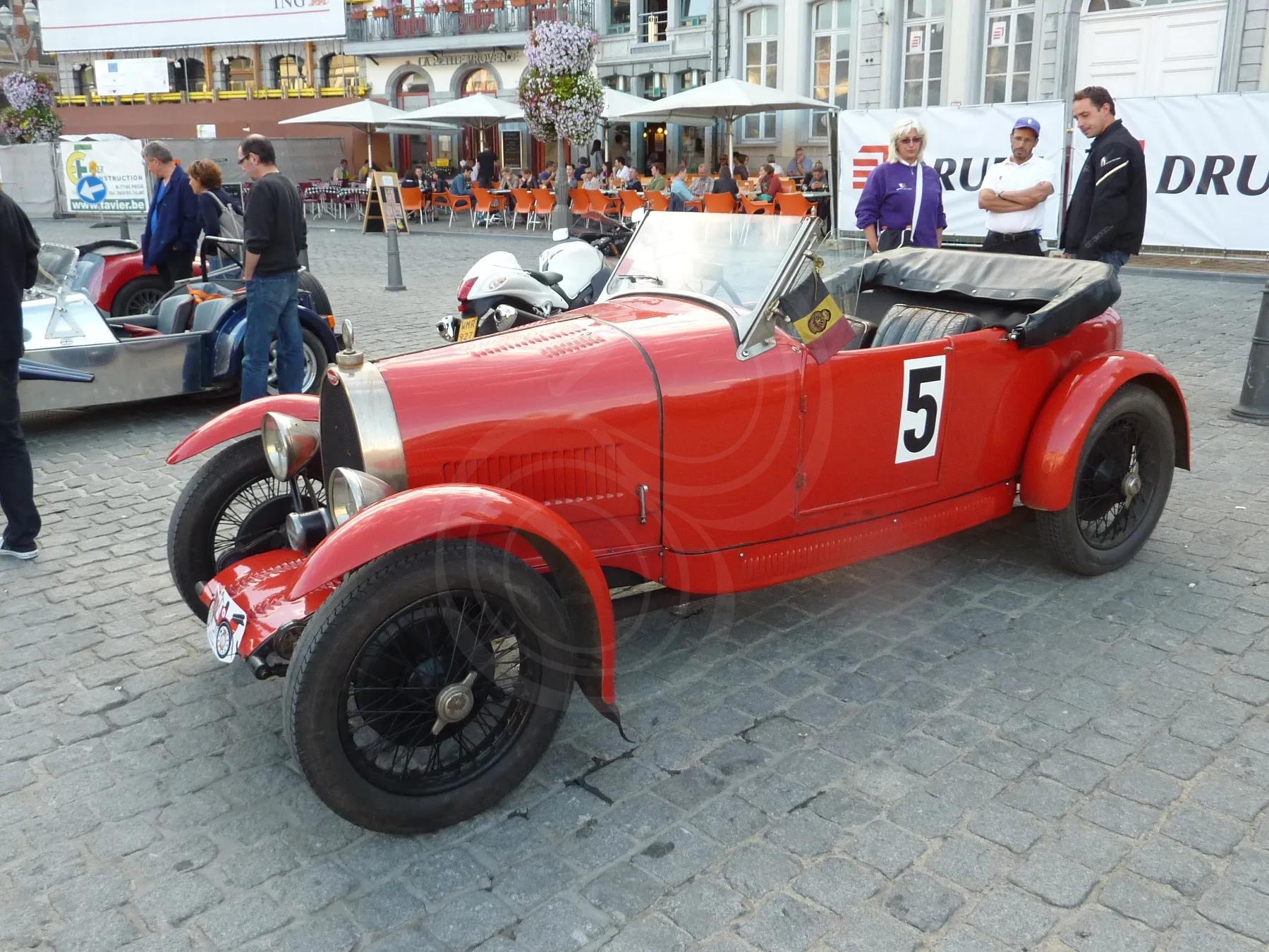

The Bugatti Brescia, encompassing the Type 13, 22, and 23, represents a pivotal moment in automotive history. Born from Ettore Bugatti's relentless pursuit of performance, these early Bugattis were defined by their lightweight construction and innovative engineering. The inline-four engine, a hallmark of the Brescia, was a marvel for its time, offering surprising power and responsiveness in a compact package.
Visually, the Brescia is instantly recognizable. Its low-slung profile, often devoid of superfluous bodywork, speaks to its racing pedigree. The exposed chassis and minimal fenders underscore its focus on function over form. While undeniably elegant in its simplicity, the Brescia's aesthetic might appear stark to modern eyes.
Driving a Brescia is a visceral experience. The direct steering, coupled with the car's light weight, provides an immediate connection to the road. However, the lack of modern amenities and the car's inherent fragility demand a skilled and attentive driver. Maintenance can be challenging, and original parts are exceedingly rare and expensive.
Despite these drawbacks, the Brescia's historical significance and driving experience continue to captivate enthusiasts. It's a raw, unadulterated expression of early automotive ambition, a testament to Bugatti's genius, and a reminder of a time when driving was a true art.