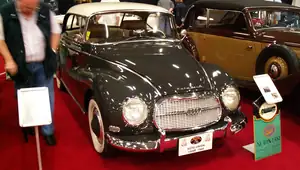
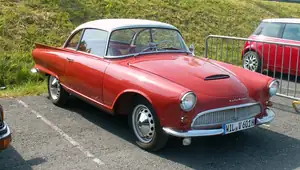
Auto Union, a name synonymous with pre-war German engineering prowess, represented a fascinating, albeit ultimately short-lived, chapter in automotive history. Formed in 1932 through the merger of four independent Saxon manufacturers - Audi, DKW, Horch, and Wanderer - the company sought to compete with the behemoth that was Daimler-Benz.
Auto Union's impact was immediate and dramatic, particularly in Grand Prix racing. Their mid-engine, supercharged racers, spearheaded by Ferdinand Porsche's design, dominated the pre-war era. These silver arrows, driven by legends like Bernd Rosemeyer and Tazio Nuvolari, were technological marvels, pushing the boundaries of speed and innovation.
However, the company's structure was complex, with each constituent brand retaining its identity and production focus. DKW, known for its two-stroke engines, became the volume producer, while Horch and Audi catered to the luxury market. Wanderer, the fourth brand, offered a range of mid-market vehicles.
The Second World War effectively ended Auto Union's initial run. Following the war, the company was dismantled and its assets dispersed. The Auto Union name, however, was resurrected in 1949, eventually leading to the modern-day Audi, a testament to the enduring legacy of this ambitious, albeit ultimately fragmented, pre-war automotive collective.